Key takeaways
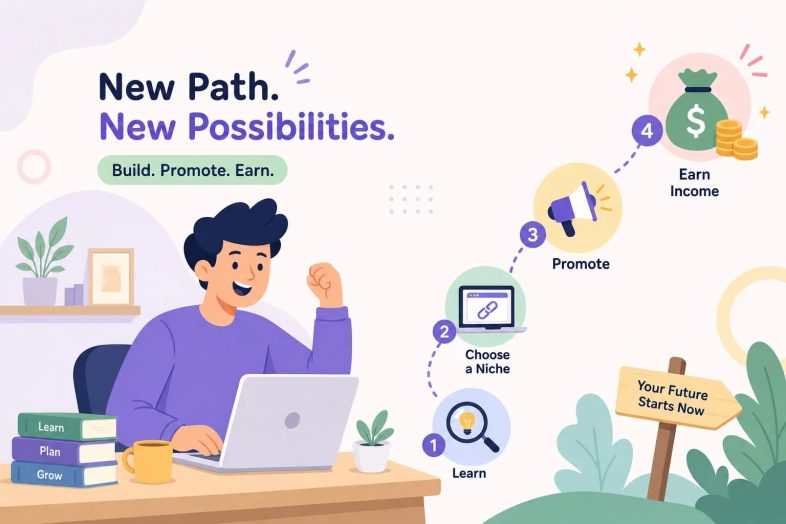
- Affiliate marketing is a viable career change, but most people see consistent commissions between 3 and 12 months after starting.
- Niche selection and content consistency matter more than which affiliate program you join first.
- A lean startup budget of $50, $200 covers everything you need in month one.
- Your first 90 days are about building, not earning. Understanding that distinction prevents early dropout.
- Working With Walter publishes phase-by-phase guides that walk career changers through each milestone without overwhelm.
This step-by-step affiliate marketing guide for career changers gives you the roadmap most people are missing when they pivot into this business after a layoff or burnout exit. Most of them treat affiliate marketing like a side hustle and expect income in 30 days. When the commissions don't show up, they quit. The problem isn't affiliate marketing, it's the missing plan.
You'll get a clear 90-day launch plan, realistic income benchmarks, and a startup budget that won't require a second mortgage. If you came from healthcare, finance, education, or the trades, your background is a competitive advantage here, and this guide shows you exactly how to use it.
Working With Walter was built specifically for people in this position: professionals who didn't grow up in digital marketing but bring real-world expertise that translates powerfully into a niche content business. Everything here is written with that audience in mind.
Why affiliate marketing fits career changers better than you think
The real mindset shift required before you start
Affiliate marketing is not a quick income replacement. That's not a warning to scare you off, it's the most important thing to internalize before you spend a single dollar or write a single post. The career changers who succeed treat this like a business from day one, not a weekend experiment.
Here's the reframe that changes everything: you're not earning income yet, you're building an asset that compounds. Content published today can generate commissions 18 months from now. A nurse with 15 years of clinical experience who writes about health and wellness tools has immediate credibility that a 22-year-old generic blogger can't replicate. That professional depth is your unfair advantage, use it.
The contrast between someone who stumbles in without a plan and someone who follows a phased roadmap is enormous. The first person chases five niches, joins 20 affiliate programs, and burns out by week six. The second person picks one niche, builds one platform, and publishes consistently for 90 days. Experience consistently shows the second approach produces results.
What makes this different from a typical side hustle
Side hustles trade time for money. Affiliate marketing, done right, builds leverage over time. You create a piece of content once and it can earn commissions repeatedly without additional work. That's the core appeal for career changers who want financial independence, not just another job with a different title.
If you're rebuilding income after a layoff or a burnout exit, the pressure to earn fast is real. Acknowledge it, then set it aside when you sit down to build. The affiliate business you construct in the next 90 days will still be generating traffic and income two years from now if you build it correctly. That's a different value proposition than any freelance gig you could land this week.
Step-by-step affiliate marketing guide for career changers: choosing your niche
How to pick one niche instead of chasing several
Pick one niche, one audience, and one problem to solve. The “passion versus profit” debate wastes more time than almost any other trap in this space. You need both relevance and commercial demand, not just a topic you enjoy.
Career changers have a structural advantage here. A finance professional writing about personal budgeting tools, a teacher creating content about online learning platforms, or a contractor covering home improvement products, each brings immediate subject-matter credibility. Your professional background often maps directly to a profitable niche. Start there before looking anywhere else.
Validating your niche before you build anything
Run a three-question test before you commit. Do people actively search for this problem? Do they spend money solving it? Do affiliate programs exist in this space? If the answer to all three is yes, you have commercial validation.
For broad consumer niches, Amazon Associates is your proof of concept, if products exist and sell, the market is real. For finance, health, and education, check Impact, Awin, and CJ Affiliate. For SaaS and tech tools, PartnerStack is a strong starting point. Well-resourced affiliate programs in a niche confirm there's money moving through that space.
Common niche mistakes career changers make
Going too broad, like “finance”, leaves you competing against established sites with years of authority. Going too narrow, like refinancing options for self-employed homeowners over 55 in a specific state, limits your audience to the point where traffic never scales. The right niche sits between those extremes.
A practical framework: start at the category level, then narrow by one audience type or one problem type. “Health and wellness for nurses returning to the workforce” is specific without being microscopic. It has a defined audience, real problems to solve, and products that help solve them.
Setting up your platform and joining your first affiliate programs
Building a simple publishing home base
A beginner affiliate needs one platform they can maintain consistently. A blog is the most flexible long-term option, it gives you compound SEO value that YouTube and social platforms don't offer in the same way. The bare-bones setup requires a domain ($10, $20/year), shared hosting ($3, $10/month), and a free-tier email provider to start.
The platform doesn't need to be polished on day one. It needs to be live and functional. Build a homepage, an about page, a content hub, and an affiliate disclosure page. That's your foundation. Everything else comes after you publish your first pieces of content.
Choosing and joining your first affiliate programs
Apply to two or three programs in your niche, not twenty. Scattered programs lead to scattered content. Amazon Associates offers the easiest approval for total beginners. Broad networks like Impact and Awin unlock more brand options as your site gains traction. PartnerStack is the right move if your niche involves software tools with recurring commissions.
One non-negotiable step: add your affiliate disclosure before you publish any monetized content. This is a legal requirement under FTC guidelines, not a suggestion. A one-sentence disclosure at the top of each post covers you legally and builds trust with your audience at the same time.
Creating content that earns your first commissions
Content formats that actually convert
Three content formats do most of the conversion work for affiliate bloggers, and understanding which to prioritize first makes a meaningful difference. Tutorial and how-to posts capture readers at the early problem-awareness stage. Product reviews target readers who are already evaluating a specific solution. Comparison posts catch buyers who are deciding between options and ready to act.
In practice, SEO-driven comparison content tends to convert at higher rates than general informational posts, while email-driven content to a warm audience converts even higher. Focus your first five posts on tutorials and comparisons, then build your email list so you have a warm audience to send future reviews to.
Building a content schedule a career changer can actually keep
Most career changers build this business while working full-time. One solid post per week beats three posts in week one followed by nothing for a month. Consistency is the variable that separates the affiliates who see results from those who don't.
Content published in months one and two produces first commissions in months three through six as search traffic compounds. That timeline feels slow when you're in it. It feels like a machine when you look back from month nine and see organic traffic arriving without additional work.
Realistic timelines, startup costs, and your 90-day launch checklist
What to expect financially in year one
Income expectations by phase:
- Months 0, 3: Expect $0, $50 in commissions. Most people earn nothing in this window, and that's correct behavior for this stage.
- Months 3, 12: First commissions arrive, ranging from $50 to $1,000/month as traffic grows and content compounds.
- Beyond 12 months: Income becomes more predictable. Some affiliates reach part-time or full-time income levels between 18 and 30 months in.
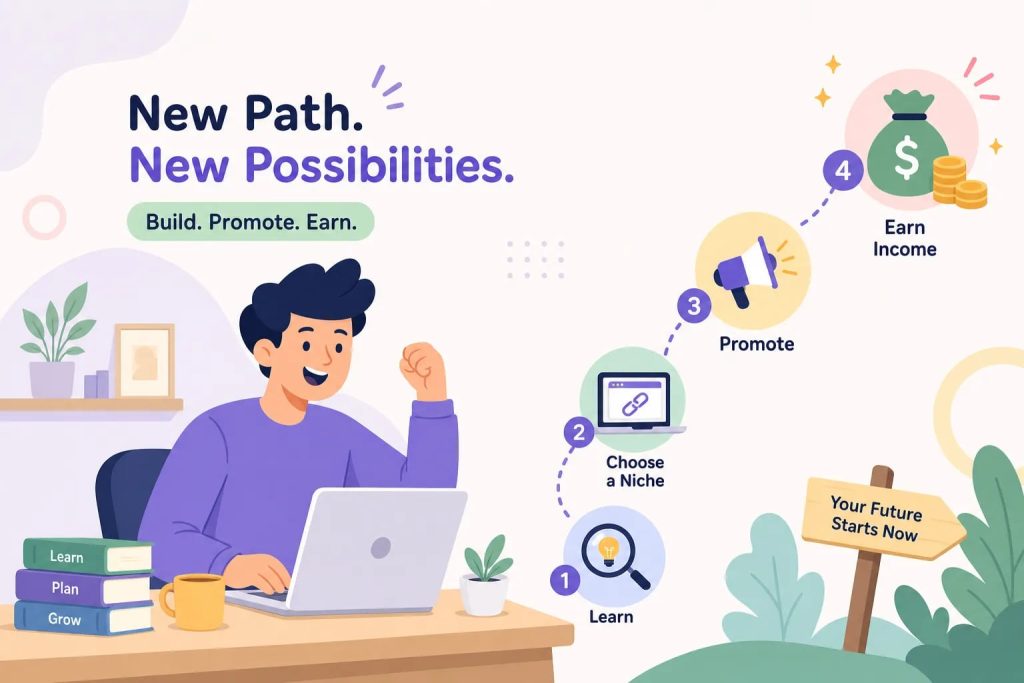
The first 90 days produce tracked affiliate links, indexed content, an email opt-in, and approved program accounts. Not commissions. Setting this expectation upfront is the single most effective thing you can do to prevent early dropout. The affiliates who quit at week eight are the ones who expected revenue, not traction.
The lean startup budget breakdown
A minimum viable setup runs $50, $135 in year one: one domain, low-cost shared hosting, a free email tier, and free SEO tools. A more comfortable beginner setup runs $200, $500 and adds a paid email plan and one light SEO tool. Paid SEO platforms like Ahrefs or Semrush (roughly $129, $140/month) are not necessary on day one.
Start lean. Validate your niche and platform in the first 90 days. Upgrade tools only after early revenue justifies the cost. Spending $400 on tools before your first post is live is a distraction, not an investment.
Your 90-day affiliate marketing launch checklist
- Days 1, 7: Choose one niche, define the audience problem, identify 3, 5 affiliate offers.
- Days 8, 14: Join two to three affiliate programs, purchase your domain and set up hosting.
- Days 15, 21: Build your basic site structure: homepage, about page, content hub, and disclosure page.
- Days 22, 30: Plan your first five content pieces mapped to buyer intent stages.
- Days 31, 45: Publish your first two to three posts with affiliate links placed naturally in context.
- Days 46, 60: Add an email opt-in with a simple lead magnet; promote content on one search or social channel.
- Days 61, 75: Track clicks and engagement, identify what's gaining traction, and publish two more posts.
- Days 76, 90: Review your performance data and double down on the content type producing clicks.
For step-by-step breakdowns of every milestone in this checklist, Working With Walter publishes phase-by-phase guides written specifically for people starting from outside the marketing world. Each guide covers what to do, in what order, and why, without the noise.
Get found online while you build your affiliate business
Publishing content is step one. Getting that content seen is step two. If you want expert help with your online visibility strategy, the team at AgencyServicesGrp.com offers services built to help small business owners and new affiliate marketers show up where their audience is already searching. Your content deserves to rank, don't build in silence.
Frequently asked questions
How long does it realistically take to make money with affiliate marketing?
Most beginners see their first commissions between three and six months. More stable, repeatable income typically arrives at the 12-month mark. Treat the first 90 days as the build phase, not the earn phase, and you'll be on the right trajectory.
Do I need a website to start affiliate marketing?
A website is the most stable long-term platform. Some career changers start with a newsletter, a YouTube channel, or a content hub on social media. A blog gives you the most control over your content and the strongest compound SEO value over time, so it's the recommended starting point for most people.
How much does it cost to start affiliate marketing from scratch?
A lean setup costs $50, $135 in year one with low-cost hosting, one domain, a free email tier, and free SEO tools. A more comfortable beginner setup runs $200, $500. You don't need paid SEO tools on day one. Validate your niche and platform first, then upgrade as early revenue allows.
Can someone over 40 with no marketing background succeed at affiliate marketing?
Yes, and their professional background is often a direct asset. Experience in healthcare, finance, education, or the trades translates into niche credibility and content authority that generic bloggers simply can't replicate. Working With Walter was built specifically for this audience, because that professional depth is worth more than most people realize when they start.
What are the best affiliate programs for someone just starting out?
Amazon Associates offers the easiest approval for complete beginners across broad consumer niches. Impact and Awin give you access to multiple brands across finance, health, and education without committing to a single program. PartnerStack is a strong option if your niche involves SaaS tools with recurring commission structures.
This step-by-step affiliate marketing guide for career changers covers the decisions and actions that matter most in your first 90 days. Pick your niche, build your platform, publish consistently, and measure what's working. The affiliates who stay the course past month three are the ones who treat the build phase as the real work, because it is.