Key takeaways
- MailerLite is the top pick for overall beginner-friendliness and free plan value in 2026
- Mailchimp and Constant Contact are the most familiar and guided options for first-time senders
- Kit and Beehiiv are purpose-built for creators whose newsletter is the core of their business
- Brevo offers no contact cap on its free plan; EmailOctopus allows up to 2,500 free contacts
- Most solo operators can set up an account and send their first campaign within one hour
- Paid plans stay under $15 per month for lists under 1,000 subscribers on most platforms listed here
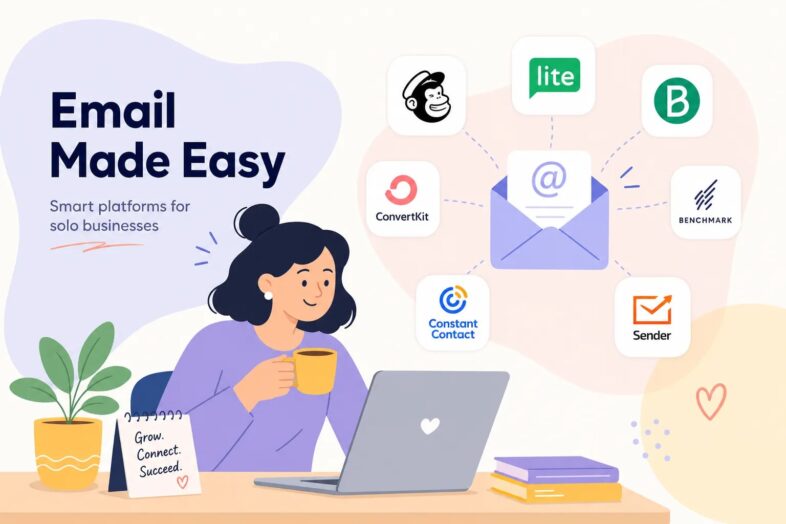
The most beginner-friendly email marketing platforms for one-person businesses make it possible to send your first campaign in under an hour, no tech background, no big budget, and no afternoon of frustration required. Running a solo business means every tool you add has to earn its place fast. The platforms covered here work right away, or they’re not worth your time.
This article covers seven platforms evaluated specifically for solo operators: how fast you can get set up, how gentle the learning curve is, what the free plan actually lets you do, and whether real support exists when you get stuck. At Working With Walter, this kind of breakdown helps small business owners skip the trial-and-error phase and get to the part that actually matters, building a list and staying in front of the right people.
What actually makes an email platform beginner-friendly for solo businesses?
Before ranking anything, it helps to establish what you’re actually evaluating. Three factors separate a genuinely approachable platform from one that just markets itself as easy.
Setup speed is the first. A truly beginner-friendly platform gets you to your first sent email in under 30 minutes. That means a clean onboarding flow, pre-built templates you don’t have to design from scratch, and no technical configuration blocking the door before you can do anything useful. Momentum matters early. Two hours of configuration before a single email goes out kills the habit before it starts.
Free plans are the second factor, and they vary wildly. Some cap you at 250 contacts. Others, like Brevo, put no cap on contacts at all but limit daily sends instead. The plan that fits a solo operator just starting out looks very different from one designed for a business ready to scale. What you need to know is what each free tier actually lets you do, not just the headline number.
Support quality is the third factor. Even the simplest platforms have moments that trip beginners up. Knowledge bases, live chat, video walkthroughs, and community forums are what separate a platform that teaches you from one that leaves you stuck on page one of the setup guide.

Most beginner-friendly email marketing platforms for one-person businesses, top three picks
These three platforms consistently come up when solo operators with no email marketing background need to get moving fast. They’re forgiving, well-documented, and work straight out of the box.
1. MailerLite: the strongest all-around starter platform
MailerLite earns the top spot because it combines a clean drag-and-drop editor, a landing page builder, and basic automation on its free plan without overwhelming you with options. The free tier supports up to 500 contacts and 12,000 emails per month. The Growing Business paid plan starts at $10 per month for 500 subscribers and $15 per month for 1,000. Setup typically takes 15 to 30 minutes to a first send, and the documentation is thorough enough that most beginners won’t need to contact support during their first few days.
The biggest advantage over Mailchimp is automation. MailerLite’s free plan includes it; Mailchimp’s does not. If you want to send a welcome sequence automatically when someone joins your list, MailerLite lets you do that without paying. That difference matters more than most beginners realize at the start.
2. Mailchimp: the most recognizable name for a reason
Mailchimp is familiar, widely integrated, and requires no prior experience to navigate. Its free plan is now capped at 250 contacts and 500 emails per month, which is more restrictive than it used to be. For a solo operator who just wants to start sending a simple newsletter or promotion, those limitations don’t matter at first. The template library is extensive, and third-party tutorials are plentiful because Mailchimp has the largest user base of any platform on this list.
The honest caveat: Mailchimp’s free plan is the weakest of the group for long-term use. Once your list crosses 250 contacts, you’re paying. If you want to stay free as long as possible, MailerLite or EmailOctopus give you considerably more room. That said, if you value name recognition and broad integration support, Mailchimp is a workable starting point.
3. Constant Contact: the most guided setup experience
Constant Contact is the right pick when you want a structured walkthrough from day one. The onboarding flow is more step-by-step than Mailchimp or MailerLite, and the customer support is stronger, including phone support that most competitors don’t offer. It starts at $12 per month on the Lite plan for small lists, with no free plan, only a trial period. In practice, that guided structure means fewer decision points to navigate on your own, which has real value if you’d rather follow a checklist than make choices on an open canvas.
Best email platforms for solo entrepreneurs who lead with content
Not every one-person business sends promotional emails. Some build their entire model around a newsletter. These two platforms are designed specifically for that approach, and they’re among the most capable beginner-friendly email marketing platforms for one-person businesses in their category.
4. Kit (formerly ConvertKit): built for audience growth
Kit is the platform writers, course creators, and coaches tend to choose because it’s structured around growing and nurturing an audience rather than just sending campaigns. The free plan supports up to 10,000 subscribers with unlimited broadcasts, unlimited landing pages, unlimited forms, audience tagging, and built-in digital product sales. That’s a remarkably generous free tier for email marketing tools aimed at solopreneurs. Kit is not the fastest to set up for pure beginners, but the onboarding is clear and the documentation assumes you’re a creator, not a marketer with a technical background.
One practical note on features: Kit’s free plan includes basic broadcast emails and simple sequences, but the full visual automation builder, the drag-and-drop workflow editor for complex conditional logic, is a paid feature. For most solo newsletter creators starting out, the free tier covers everything needed for the first six months and beyond.
5. Beehiiv: when your newsletter is the entire business
Beehiiv takes a different approach. It’s less of an email marketing tool and more of a newsletter publishing platform with a built-in referral program, a publication-style website, and subscriber monetization tools included from the start. The free plan supports up to 2,500 subscribers with unlimited sends. If your goal is to build a newsletter audience, monetize through sponsorships or paid subscriptions, and have a publication website built in, Beehiiv handles all of that in one place.
It’s more opinionated than other platforms, which actually makes it simpler for the specific use case it serves. You’re not piecing together tools from different providers. You’re working inside one system built for exactly what you’re doing. The tradeoff is that Beehiiv doesn’t do much outside the newsletter publishing model, if you also need e-commerce integrations or complex CRM syncing, it’s not the right fit.

Two more email marketing tools for solopreneurs worth knowing in 2026
These two platforms earn a spot for specific situations that come up often for solo operators, particularly around free plan limits and multi-channel communication.
6. Brevo: no contact cap, email and SMS together
Brevo stands out because its free plan stores up to 100,000 contacts without a paywall. The tradeoff is a daily send limit of 300 emails, which works fine for a small, engaged list but becomes a bottleneck as you grow. Brevo also includes SMS and transactional email in the same account, making it practical for solo service providers who communicate with clients across multiple channels and don’t want to manage separate tools.
7. EmailOctopus: the most generous free plan for growing lists
EmailOctopus offers a free plan that supports up to 2,500 contacts and 10,000 emails per month, with up to three automations included. That’s more room than almost any other free tier on this list. The interface is simpler and the feature set is leaner than MailerLite or Mailchimp. For a solo operator who just needs to send consistent emails to a growing audience without paying anything yet, EmailOctopus removes the cost barrier longer than most competitors do.
How to choose and send your first campaign today
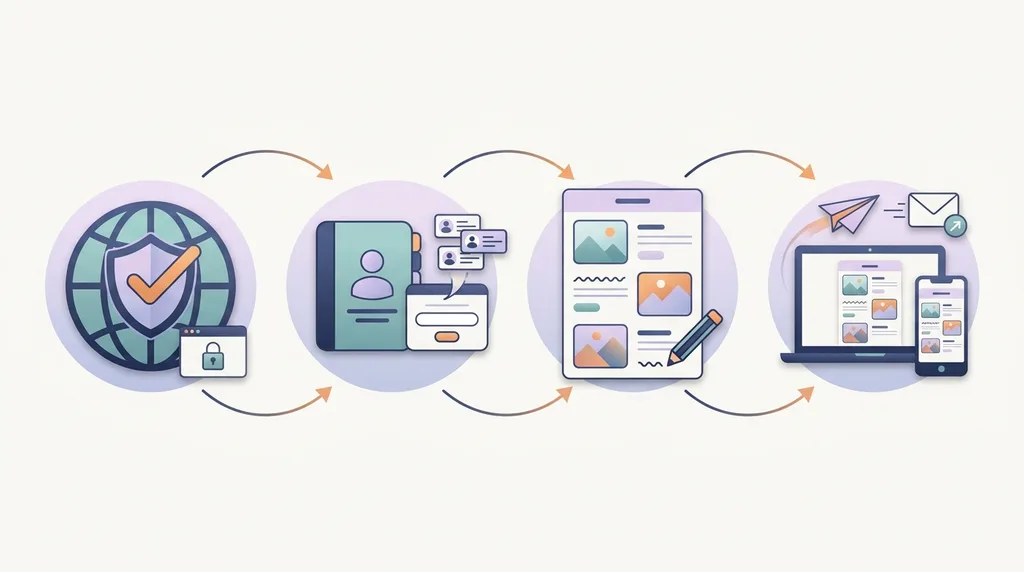
Knowing the options is only half the work. The other half is picking one and getting started, because switching platforms later adds unnecessary effort. Here’s a four-step checklist that applies regardless of which platform you choose.
- Sign up and verify your sender domain (10 to 15 minutes). This step protects your deliverability and prevents your emails from landing in spam.
- Import your contacts or create a signup form (about 10 minutes). Even five contacts is enough to get started. The form setup matters more for long-term growth.
- Choose a pre-built template and customize it with your branding and first message (15 to 20 minutes). Don’t design from scratch, use what the platform gives you.
- Preview, test-send to yourself, and send or schedule your first campaign (under 10 minutes with a clear message ready).
Most platforms on this list let you complete all four steps in under an hour. The only variable is knowing what you want to say in advance. Working With Walter publishes beginner tutorials covering account setup and first welcome sequences for MailerLite, Mailchimp, Kit, and Brevo in plain language that assumes no prior experience. If any step feels unclear, that’s the place to start.
Ready to grow your online presence beyond your email list?
Email is one piece of the picture. Walter’s AgencyServicesGrp helps small business owners build a consistent digital presence across channels so your list doesn’t exist in isolation. If you want email, visibility, and reach working together instead of separately, reach out to the AgencyServicesGrp team directly and ask about their online visibility packages for small businesses.
Questions solo business owners ask about email platforms
Can I start email marketing completely free?
Yes. MailerLite, Brevo, EmailOctopus, Kit, and Beehiiv all offer free plans that support real list sizes and actual sends, not just a brief trial period. For a solo operator with a list under 1,000 subscribers, you can stay on a free plan for months before needing to upgrade. The key is matching the free plan to your growth rate and the features you actually need right now.
How many emails can I send per month on a free plan?
It depends on the platform. MailerLite allows 12,000 emails per month on free. Brevo limits you to 300 per day. Beehiiv allows unlimited sends up to 2,500 subscribers. EmailOctopus allows around 10,000 per month. Mailchimp’s free tier is the most restrictive: 500 emails per month to a maximum of 250 contacts, which is far less room than most of the alternatives listed here.
Which platform is the easiest to switch from later?
MailerLite and Mailchimp both export your contact list cleanly, which makes switching less painful if your needs change. Most platforms accept CSV imports, so you’re never truly locked in on the contact side. The bigger switching cost is re-creating your automation sequences and email templates, not moving contacts. That’s worth factoring in before you invest significant time building complex automations on a platform you’re not fully committed to. A brief callout worth noting: if your automations are simple (a welcome email or a two-step sequence), switching later is low-effort on any platform here.
Do I need a website to start email marketing?
No. Every platform on this list lets you build a standalone landing page with a signup form. You can collect subscribers, send campaigns, and run automations without a separate website. MailerLite, Kit, and Beehiiv are especially strong on this front, with landing page builders included in their free plans. This makes email marketing accessible for solo operators who aren’t ready to invest in a full website yet.
The bottom line
The most beginner-friendly email marketing platforms for one-person businesses in 2026 share a few things in common: fast setup, honest free plans, and documentation that doesn’t assume you already know everything. MailerLite is the standout pick for most solo operators starting from zero. Kit and Beehiiv serve a different need when your content is the product. If free plan limits are your main concern, Brevo and EmailOctopus give you more room before you have to pay anything.
Pick one from this list that fits your situation, follow the four-step checklist above, and send your first email this week. Working With Walter has the tutorials to walk you through setup on the top-ranked platforms, a guided path instead of figuring it out on your own.