Key Takeaways
- Affiliate marketing requires no product, no website, and no prior experience to begin
- Free platforms like Amazon Associates and ClickBank accept beginners immediately
- FTC disclosure rules are simple, non-negotiable, and easy to follow from the start
- First earnings realistically arrive between months 3 and 6 with consistent effort
- Working With Walter offers step-by-step guidance built specifically for adults over 40
Most people over 40 picture affiliate marketing as something that belongs to a 25-year-old with a ring light, a devoted following, and an unshakeable belief in hustle culture. That picture is not just incomplete; it’s wrong. If you’re figuring out how to start affiliate marketing after 40 with no experience, no audience, and no technical background, this article is written for you specifically.
The real hesitation is not laziness. It’s uncertainty: Where do you actually start? What if you spend three months going in circles? Working With Walter is a platform built for exactly this moment in life, designed for career changers and small business owners who didn’t grow up in the digital world but are ready to learn it on their own terms. By the end of this post, you’ll have a clear, week-by-week 30-day plan to get started.
Why Adults Over 40 Have a Quiet Advantage in Affiliate Marketing
The assumption is that you’re behind. That younger people have a head start you can’t close. Flip that. Your life experience is the actual competitive edge, and it’s one most 25-year-old affiliates simply don’t have.
Credibility in a niche comes from lived experience, not a large audience. A 47-year-old writing honestly about managing chronic pain, planning early retirement, or renovating a house on a real budget carries more weight with readers than someone who just read about those topics last week. Audiences are increasingly skeptical of polished influencers. They respond to people who have actually lived the problem they’re describing.
You also don’t need to know how to code, build a sales funnel, or edit video. What you actually need is a free account on one platform, one niche topic you understand from experience, and the discipline to show up consistently. That combination is available to anyone.
What You Actually Need to Start (and What You Can Skip)
Most beginners overbuild before they ever publish a single thing. They research for weeks, sign up for a dozen platforms, and freeze before writing one sentence. The honest minimum setup is much simpler than that.
Start with a free account on Amazon Associates or ClickBank. Amazon Associates approves most applicants within 24 to 48 hours and requires no minimum following or website. ClickBank approval is instant. Neither requires you to have an established audience before you apply. For content, pick one channel: a simple blog on WordPress.com or Medium, a TikTok account, or a YouTube Shorts channel. One channel, not all three.
Before you publish a single affiliate link, add an FTC-compliant disclosure to every piece of content. A plain sentence does the job: “This post contains affiliate links. If you buy through them, I may earn a commission at no extra cost to you.” This is not optional in the United States. It protects you legally and builds trust with readers at the same time.
For your niche, focus on one topic you already know. Lifestyle, health, personal finance, and hobbies all have strong, beginner-friendly programs. Fitbit works well for health audiences. ShareASale (now Awin) covers lifestyle and retail broadly. ClickBank is popular for finance and wellness digital products. Start with one program. Spreading across five at once is the fastest route to quitting.

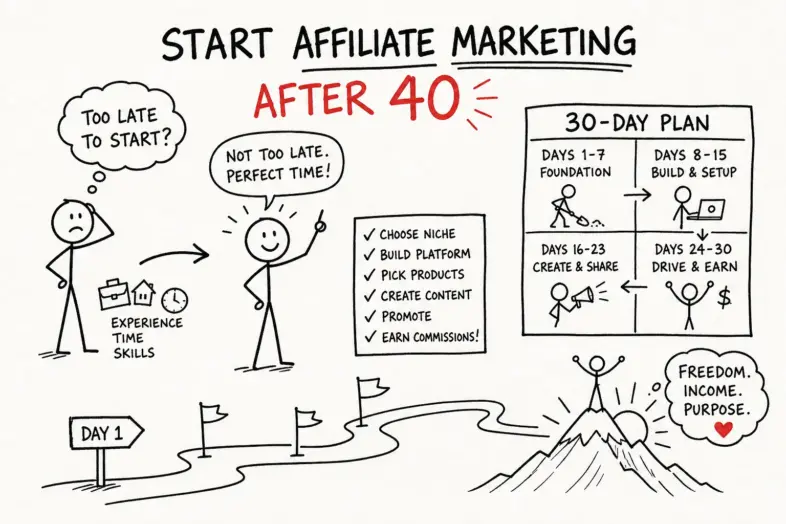
How to Start Affiliate Marketing After 40 with No Experience: Your 30-Day Plan
This plan is not complicated. It is just unfamiliar territory, and that’s exactly why having a map matters.
Week 1: Pick One Niche, Join One Program
Days 1 through 3, identify your niche using prompts that draw on real experience: What do your friends ask your advice about? What have you figured out the hard way that took years to learn? The answers are your starting point. Days 4 through 7, sign up for Amazon Associates or ClickBank and set up your content channel. If you choose blogging, WordPress.com and Medium are both free and require no technical setup. If you prefer video, TikTok and YouTube Shorts both push content to new viewers without requiring an existing following. Before you publish anything, add your disclosure statement. That one step takes five minutes and sets you up on the right foot legally.
Week 2: Create Your First Three Pieces of Content
Write or record one honest product review, one “how I actually use this” post, and one comparison piece between two options in your niche. Keep each one specific and personal. Write the way you’d explain something to a friend over coffee, not the way you think a marketing blog is supposed to sound. Working With Walter’s beginner affiliate guides are a useful resource here for structuring content that converts without feeling sales-heavy. Three pieces by the end of week two gives you a real foundation to build from.

Week 3: Share It Without Embarrassment
Share your content in one community you already belong to: a Facebook group, a Reddit thread, a neighborhood newsletter, or a local forum. You’re not spamming. You’re contributing something useful to a space you already participate in. Short-form video on TikTok or YouTube Shorts is worth your attention here because the algorithm on both platforms actively pushes new content to strangers. You do not need followers for a video to get seen. That is a real advantage for someone starting from zero.
Week 4: Review, Adjust, and Commit
Check which content got any traction at all, even a handful of views or clicks, and do more of that. The goal by day 30 is not a commission. It is a working setup with at least five published pieces of content, a clear niche direction, and a routine you can sustain. That foundation is worth more than a lucky early sale.
What to Realistically Expect in Your First 90 Days
Months one through three will likely produce $0 in commissions. That is normal, and it is not a failure signal. It is the investment phase, where you are building content as an asset rather than turning on a faucet. Most beginners who quit do so during this window, which is exactly why understanding it in advance matters.
Between months four and six, first commissions begin to appear, typically $10 to $50. Those amounts are small, but they confirm the setup is working and the content is reaching people. By month 12, most consistent beginners reach $300 to $500 per month. A smaller group who treat it like a part-time commitment clear $1,000 or more. Affiliate marketing is a slow-build income stream. It compounds over time rather than paying out immediately.
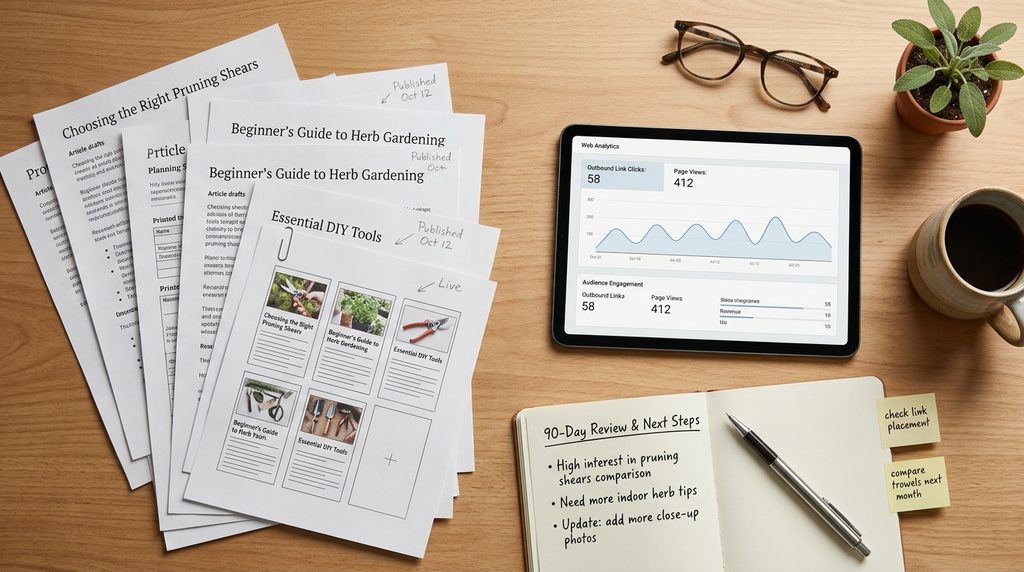
At the 90-day mark, a realistic picture of success includes five to ten published pieces of content with affiliate links properly disclosed and at least one program producing clicks, even without commissions yet. You will also have a clearer sense of what your audience actually wants to know, along with enough data to confirm your niche or make a smart pivot.
How Working With Walter Supports This Journey
Working With Walter publishes affiliate marketing content that does not assume prior knowledge, does not require tech fluency, and does not push overnight-income tactics. The platform is designed for career changers and small business owners who need practical guidance, not hype. Content areas include beginner affiliate program walkthroughs, passive income strategies for mid-life professionals, and online income guides for people with no marketing background. If you want a resource that speaks your language and meets you where you are, Working With Walter is the place to start.
Build Your Online Visibility with AgencyServicesGrp
Once your affiliate content is live, getting found is the next challenge. Publishing is only half the equation. Walter’s AgencyServicesGrp specializes in online visibility strategies for small businesses and independent creators who want to be seen without relying entirely on SEO or paid advertising. If you’re ready to grow your reach beyond organic search, visit agencyservicesgrp.com to explore what’s available for your stage of business.
Frequently Asked Questions About Starting Affiliate Marketing After 40 with No Experience
Do I need a website to start affiliate marketing after 40?
No. Platforms like TikTok, YouTube Shorts, and Medium let you publish affiliate content for free without owning a domain. Amazon Associates and ClickBank both allow you to apply using an email address and payment method without submitting a website URL.
How long does it take to get approved for affiliate programs?
Amazon Associates approves most applicants within 24 to 48 hours. ClickBank approval is instant. ShareASale (now Awin) typically takes one to three business days. None of these programs require a minimum following or traffic threshold for beginner applicants.
How do I disclose affiliate links properly in the United States?
Place a plain-language disclosure before your first affiliate link in every post, video description, or social caption. A single sentence is sufficient: “This post contains affiliate links. I may earn a commission at no extra cost to you.” If you use Amazon links specifically, Amazon requires this exact phrase on every page: “As an Amazon Associate I earn from qualifying purchases.”
Is affiliate marketing realistic as a retirement income supplement?
Yes, with realistic expectations. Most consistent beginners reach $300 to $500 per month within 12 months of starting. It is not a salary replacement overnight, but it builds over time and does not require you to trade hours directly for dollars once the content is published.
Which free platform is safest for posting affiliate links as a beginner?
Medium explicitly allows affiliate links for beginners in 2026, permits up to five affiliate links per article, and requires a clear disclosure statement, making it a confirmed, beginner-friendly option with no cost to join. TikTok and YouTube Shorts both allow affiliate promotion as well; review each platform’s current creator monetization policies before publishing links, as terms update regularly.
One Last Thought
Starting something new at 40, 50, or beyond is not a handicap. It is a choice that most people around you won’t make. The 30-day plan above is genuinely doable: one niche, one program, a handful of honest pieces of content, and a disclosure sentence added to everything you publish.
Learning how to start affiliate marketing after 40 with no experience is not complicated. It is just unfamiliar, and unfamiliar becomes familiar quickly once you take the first step. You have already spent decades building knowledge that most beginners have to fake. Put it to work. Explore Working With Walter for your next move, and visit agencyservicesgrp.com when you’re ready to get your content seen.
