- Best free platform overall: Brevo (up to 100,000 contacts reported, 9,000 emails/month)
- Best for ecommerce: Klaviyo (Shopify-native, abandoned cart built in)
- Best automation for beginners: MailerLite or GetResponse (both include automation on entry-level plans with minimal setup)
- Pricing jumps sharply at 10,000 contacts across most platforms
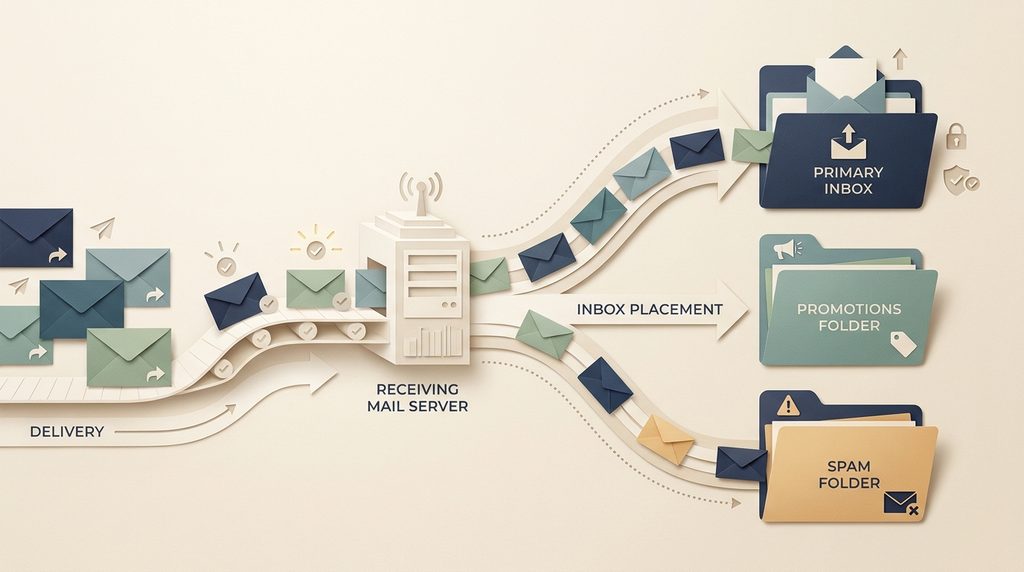
- Deliverability varies more than most comparison sites admit; inbox placement and delivery rate are not the same thing
There are dozens of email marketing tools competing for your attention, your money, and your login credentials. If you’ve spent more than 20 minutes trying to compare them, you already know the problem: every platform claims to be the best, the easiest, and the most affordable. Cutting through that noise is exactly what this guide does.
At Working With Walter, we focus on practical digital marketing advice for small business owners and solopreneurs. This breakdown covers 12 email marketing tools evaluated on price, ease of use, automation depth, and beginner-friendliness. By the end, you’ll have a shortlist of two or three platforms that actually match your situation.
What to look at before picking email marketing tools and platforms
Before you compare tools, you need to define what you actually need. Most small businesses end up paying for features they never touch. Ask yourself whether you need basic newsletters, automated welcome sequences, or full ecommerce integration. That one question eliminates at least half the platforms on this list immediately.
Price vs. features: know what you actually need
Free plans look generous on the surface until you hit their caps. The most common limits that catch people off guard are contact ceilings, monthly send limits, and locked automation. A free plan that blocks you from sending an automated welcome email is nearly useless for a growing business. That’s why it’s worth understanding each platform’s actual free-tier restrictions before you sign up, not just the headline number.
Why deliverability is the stat that actually matters
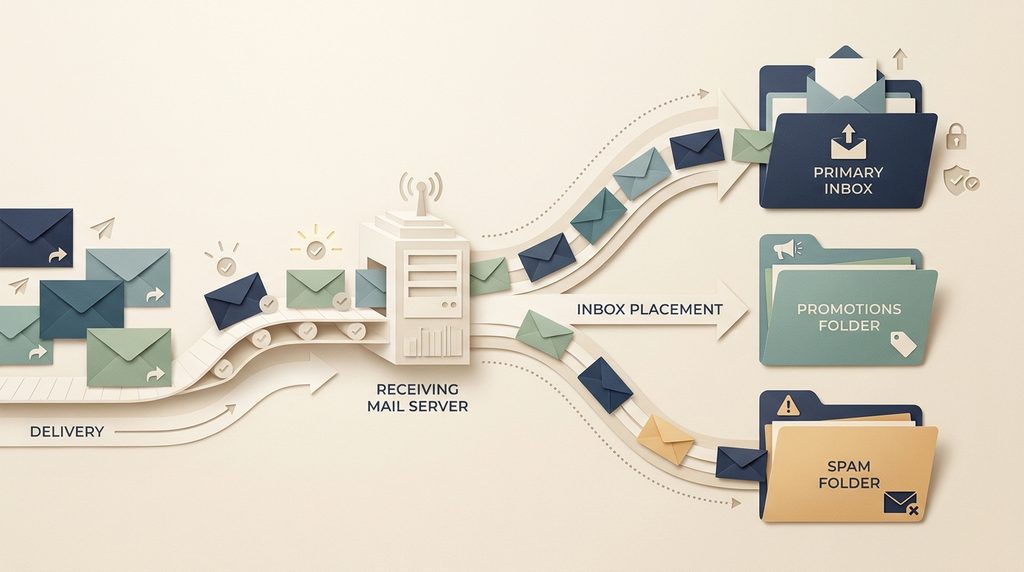
There’s a critical difference between delivery rate and inbox placement rate. Delivery rate tells you the email reached the receiving server. Inbox placement rate tells you whether it landed in the inbox or the spam folder. Mailchimp, for example, still advertises 99%+ deliverability, but Q1 2025 testing by independent reviewers such as EmailToolTester showed inbox placement as low as 32% in some conditions and 78% in others. HubSpot reached 79% in controlled comparisons from the same period. That gap matters for your open rates and revenue. When evaluating any email service provider (ESP), ask for inbox placement data, not just delivery rate figures.
Best free email marketing tools worth using in 2026
If you’re just getting started or testing email marketing before committing to a paid plan, these are the newsletter tools and platforms worth your time. Not all free tiers are built equal, and a few are genuinely useful for real business operations.
Brevo: the most generous free tier on the market
Brevo offers contact storage widely reported at up to 100,000 contacts in 2026, along with 9,000 emails per month and automation features at no cost. The only meaningful trade-off is a daily sending cap of 300 emails. For a small list or a business just building its first sequences, this is the strongest free plan available in 2026. Verify current limits against Brevo’s pricing page, as contact caps can vary by account type.
Sender: best free pick for automation on a budget
Sender allows 2,500 subscribers and 15,000 emails per month on its free plan. It includes a drag-and-drop editor, automation workflows, and segmentation without requiring a credit card. For someone who wants real automation before spending a dollar, Sender is the top pick among bulk email services at this price point.
MailerLite, Kit, and Mailchimp: the runners-up
MailerLite’s free plan includes basic automation and landing pages, though the subscriber limit is tighter than Brevo or Sender. Kit offers up to 10,000 contacts with unlimited sends, making it attractive for creators building a newsletter audience. Mailchimp’s free plan is the weakest of the three: it caps you at 250 contacts and 500 emails per month (verify current limits at Mailchimp’s pricing page, as these figures have shifted in recent updates), and advanced automations are largely unavailable, only basic automation triggers remain on the free tier. For a small business that needs full sequences and not just one-off campaigns, Mailchimp’s free tier will be too limited.
Top email marketing tools for ecommerce stores
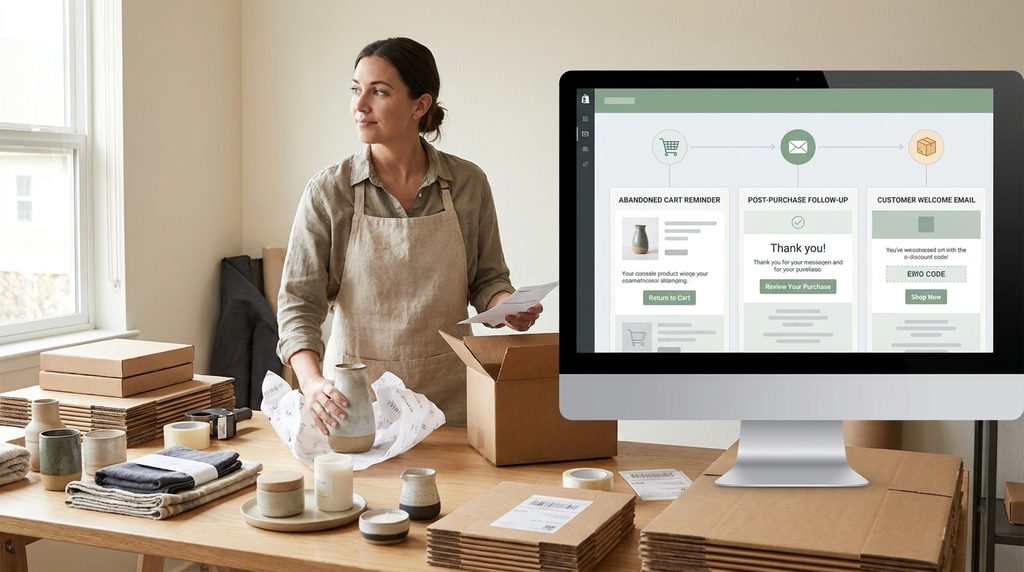
Ecommerce email marketing lives or dies on integrations. Abandoned cart recovery, product recommendations, and behavioral triggers are what separate a basic email campaign tool from a true ecommerce email platform. Here’s how the top three stack up.
Klaviyo: the standard for Shopify stores
Klaviyo is built for ecommerce from the ground up. Its native Shopify integration pulls in customer behavior, purchase history, and browsing data to power automated flows. Abandoned cart emails, post-purchase sequences, and win-back campaigns are all ready to configure without third-party plugins. Pricing starts at $20 per month for 500 profiles, with a free tier available up to 250 contacts. For stores with active email lists and consistent transaction volume, Klaviyo tends to pay for itself quickly.
Omnisend: solid all-in-one with SMS built in
Omnisend bundles email, SMS, and web push notifications into a single workflow builder. Its free tier supports 250 contacts and 500 emails per month. Paid plans start at $16 per month at 500 contacts and scale to $132 per month at 10,000 contacts. That’s higher than some competitors, but the native multichannel setup is a real advantage for stores running simultaneous email and SMS campaigns without managing two separate tools.
Drip: built for automated nurture sequences
Drip focuses on behavioral automation. It offers event-triggered email, dynamic content, and split testing built into its campaign builder. There’s no free tier, and pricing starts at $39 per month. Drip fits stores already doing volume and ready for sophisticated automation without moving to an enterprise platform.
Best email automation software for solopreneurs and small business owners
Automation is where email marketing earns its keep. A well-built sequence can nurture a lead, deliver a welcome series, and follow up after a consultation, all without manual intervention on your end. The following three platforms cover this ground well at the small business level.
ActiveCampaign: deepest automation at this price point
ActiveCampaign offers branching logic, event triggers, reusable journey components, lead scoring, dynamic content, and split testing. It’s the most capable email automation software on this list short of enterprise tools. Pricing starts at $15 per month with no free plan, scaling to $189 per month at 10,000 contacts on the Plus plan. This is the right choice for businesses ready to invest in a serious automation stack and willing to climb a learning curve.
GetResponse: solid mid-range option with a full toolkit
GetResponse bundles automation workflows, landing pages, and webinar hosting into a single platform starting at $19 per month. At 10,000 contacts, it comes in at $79 per month, significantly cheaper than ActiveCampaign at the same scale. For a small business that wants more than just email without paying enterprise prices, GetResponse is a strong value proposition in 2026.
MailerLite: the easiest starting point for beginners
MailerLite has the cleanest interface of any full-featured platform on this list. Automation is available on both free and paid plans, landing pages are built in, and the learning curve is the gentlest of the group. Paid plans start at $10 per month (confirm current pricing at MailerLite’s pricing page, as rates varied across sources in 2026). If you’ve never built an email sequence before and want a platform that won’t overwhelm you in week one, MailerLite is a smart place to start.
What you’ll actually pay at 500, 2,000, and 10,000 contacts
Pricing comparisons mean nothing without context. Here’s what you’ll pay at each common list size, based on 2026 pricing data. All figures reflect monthly billing on standard entry tiers unless noted; annual billing typically reduces costs by 15, 20%. Confirm exact rates on each vendor’s pricing page before committing.
| Platform | ~500 contacts | ~10,000 contacts | Free plan? |
|---|---|---|---|
| Brevo | Free or $9/mo | $25, $35/mo | Yes |
| Sender | Free or $16/mo | $40/mo | Yes |
| MailerLite | $10/mo | $33/mo | Yes (limited) |
| GetResponse | $19/mo | $79/mo | Basic |
| ActiveCampaign | $15/mo | $189/mo | No |
| Klaviyo | $20/mo | $150/mo | Yes (250 contacts) |
| Omnisend | $16/mo | $132/mo | Yes (250 contacts) |
| Mailchimp | $13/mo | $110/mo | Yes (250 contacts) |
| HubSpot | $15/seat | $800, $890/mo (Pro) | Yes (CRM only) |
The budget-friendly starting tier belongs to Brevo, Sender, MailerLite, and EmailOctopus. All come in under $10 per month or free at 500 contacts. Mailchimp’s paid entry at $13 per month delivers less automation than its cheaper competitors at the same size, making it a weaker value at this tier.
At 10,000 contacts, MailerLite and GetResponse stay reasonable at $33 to $79 per month. ActiveCampaign, Omnisend, and Klaviyo all push past $130 per month, worth it only when the automation is generating measurable return. HubSpot operates on a different pricing model entirely: it bundles CRM seats and its full Marketing Hub rather than charging by contact volume, which means costs escalate quickly as your feature or seat needs grow. For most small businesses focused purely on email, that structure makes HubSpot difficult to justify against contact-based email marketing apps.
Which platform fits your situation, and where to go next
Match the tool to your use case rather than chasing the longest feature list. Here’s the direct answer by situation.
- Running a newsletter or simple email list: MailerLite or Brevo
- Running a Shopify or ecommerce store: Klaviyo first, Omnisend if cost is the priority
- Solopreneur needing serious automation: ActiveCampaign or GetResponse
- Starting with zero budget: Sender or Brevo free plan
Working With Walter covers full platform breakdowns, side-by-side tutorials, and setup guides for each of the tools in this article. Email marketing is one piece of a larger visibility strategy, and getting the right platform in place is the foundation.
Email marketing works best when it’s part of a broader presence online. AgencyServicesGrp helps small businesses build online visibility across multiple platforms and channels.
The bottom line on email marketing tools
The best email platform is the one that fits your list size, budget, and goals right now, not the one with the longest feature page. Use the three criteria from this guide to narrow your list: free versus paid, ecommerce versus newsletter, and beginner-friendly versus automation-heavy.
Pick one of the email marketing tools from the shortlist above, sign up for a free trial, and send your first campaign this week. Every day you spend comparing email marketing platforms is a day you’re not building your list.
Frequently asked questions about email marketing tools
What is the best free email marketing tool for a small business?
Brevo leads on free plan generosity, with contact storage reported up to 100,000 contacts and 9,000 emails per month. If you need automation included at no cost, Sender is the stronger pick: it supports 2,500 subscribers and 15,000 emails per month with full automation workflows on the free plan.
Which email marketing platform is easiest for beginners?
MailerLite is the most beginner-friendly full-featured option on this list. It has a clean, intuitive interface, includes automation on the free plan, and integrates landing pages without requiring a separate tool. Most users can launch their first sequence within a few hours of signing up.
How much does email marketing software cost for 10,000 contacts?
Costs range from $33 per month with MailerLite to $189 per month with ActiveCampaign, depending on the platform and features you need. GetResponse lands at $79 per month, Klaviyo at $150 per month, and Omnisend at $132 per month at the 10,000-contact tier. Annual billing typically lowers each of these figures.
Does Mailchimp have good deliverability in 2026?
As of our most recent data (Q1 2025, sourced from independent reviewers including EmailToolTester), Mailchimp inbox placement ranged from 32% to 78% depending on conditions and methodology. That’s below platforms like HubSpot, which reached 79% in controlled comparisons from the same period. Mailchimp’s own materials cite 99%+ deliverability, but that figure refers to delivery rate, whether an email reached the server, not whether it reached the inbox. Authentication setup and consistent list hygiene improve results on any platform, including Mailchimp. Updated 2026 benchmark data may shift these figures as testing methodologies evolve.
What is the difference between email delivery rate and inbox placement rate?
Delivery rate measures whether the receiving server accepted your email. Inbox placement rate measures whether that email actually landed in the inbox rather than the spam or promotions folder. A platform can show a 99% delivery rate and still route 30% of your emails straight to spam. Inbox placement is the number that actually affects opens, clicks, and revenue, and it’s the metric any serious email service provider (ESP) should be able to report on.