Key Takeaways Before You Read On
Here are the four facts that matter most as you work through this comparison:
- Freelancing pays faster: most beginners land a first paying gig within 2, 4 weeks on Fiverr or Upwork
- Affiliate marketing takes longer: months 1, 2 are typically $0, with first real sales appearing in months 3, 6
- Both paths have low startup costs, roughly $0, $100 per month for a lean beginner setup
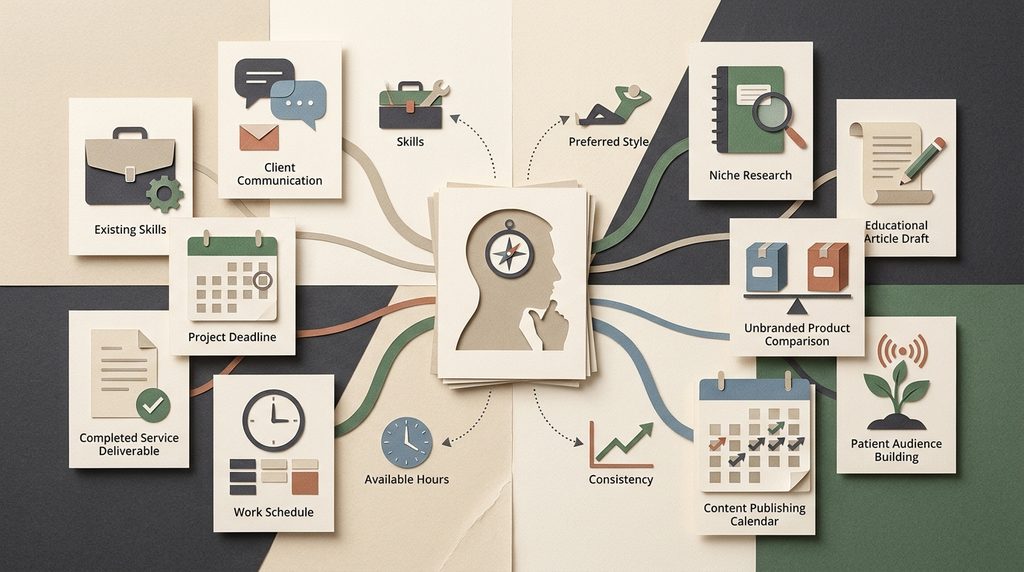
- The right choice comes down to three things: how fast you need income, what skills you already have, and how many hours per week you can realistically commit
Affiliate marketing vs freelancing, which is better for beginners? That question comes up constantly, and most content answers it by picking a side and selling it hard without giving you the honest picture of what each path actually demands. This article does the comparison straight, covering income timelines, startup costs, platform choices, and the one question that matters most: which model fits your situation right now. Working With Walter covers both paths in depth, so once you decide, you’ll have a clear starting point instead of a Google rabbit hole.
Keep those benchmarks in mind as you read. They’ll help you self-select into the section that applies most to your situation.
What Each Path Actually Looks Like Day to Day
The Freelancing Day-to-Day: Trading Skills for Clients
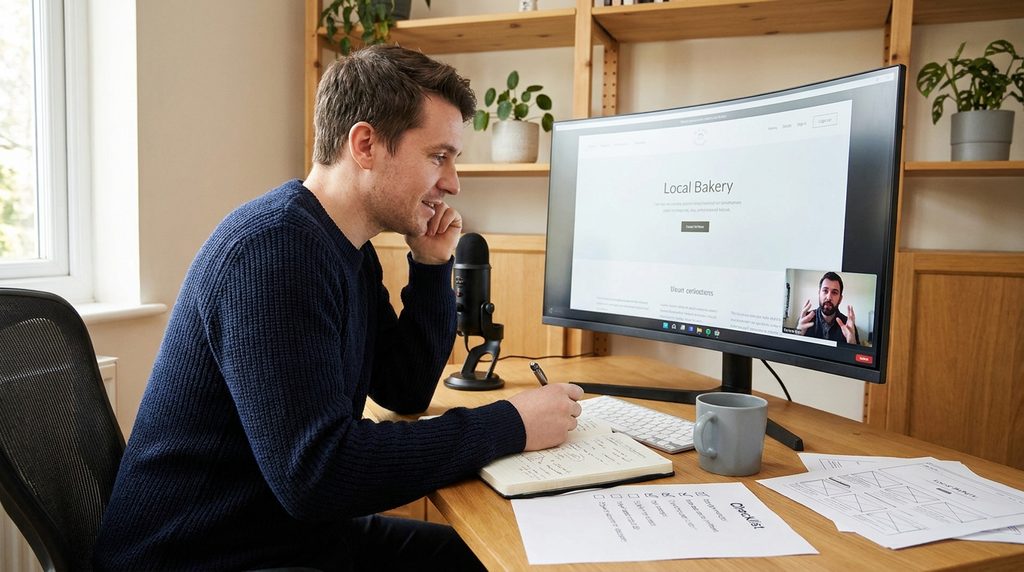
Your first 30 days as a freelancer involve creating a profile, writing service descriptions or gig packages, sending proposals or waiting for inbound orders, managing client communication, delivering work, and collecting reviews. It’s active income in the purest sense: when you stop working, income stops. The upside is direct feedback and a fast learning curve tied to real market demand. Fiverr gets you visible to buyers quickly without bidding, while Upwork gives you better access to longer-term client relationships once you have a few reviews behind you.
The Affiliate Marketing Day-to-Day: Building Before You Earn
Your first 30 days as an affiliate marketer look completely different. You spend that time choosing a niche, setting up a content channel, a blog, YouTube channel, email list, or social account, joining programs like Amazon Associates or ShareASale, and creating content designed to drive clicks toward product recommendations. The income doesn’t appear in month one. Months 1 and 2 are almost entirely front-loaded work with no paycheck attached. The payoff comes later, when content you created once keeps earning commissions month after month without additional effort on your part.
Lifestyle Fit: Which Model Suits Your Situation
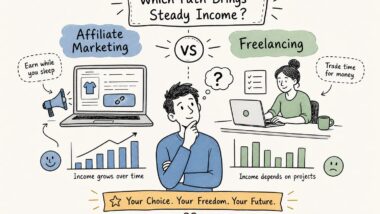
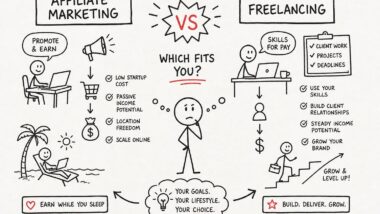
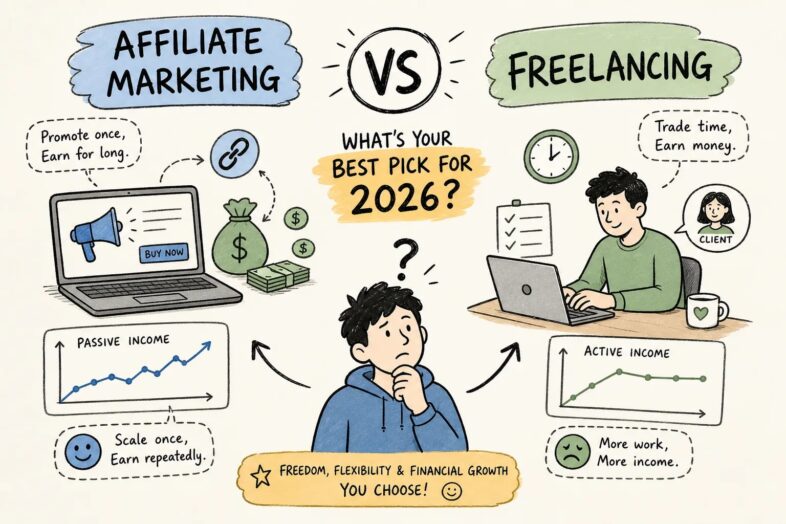
Freelancing fits people who want clear deadlines, direct client relationships, and fast feedback on their work. Affiliate marketing fits people who prefer building systems, can handle delayed rewards, and want income that doesn’t require logging on every day once the content is live. Neither is objectively better. The real question is which set of tradeoffs you’re willing to live with for the next 6, 12 months.
Affiliate Marketing vs Freelancing: Which Is Better for Beginners on a Timeline?
Freelancing Income Timeline: First Client in Weeks
Platform data and user reports show a consistent pattern: Fiverr beginners with well-optimized gigs often receive a first order within 7, 14 days. Upwork beginners typically win their first contract within 2, 4 weeks. Factor in payment holds, Fiverr releases funds 14 days after order completion and Upwork operates on billing cycles, and a realistic “first dollar in your account” window for a prepared beginner is 4, 6 weeks. That’s still fast compared to almost any other online income model available to someone starting from scratch.
Affiliate Marketing Income Timeline: The 3-to-6 Month Reality
Most cold-start affiliate beginners earn $0 in months 1 and 2. First sales typically appear somewhere in months 3, 6, and early earnings are sporadic, $0, $50 is common before any consistency develops. Once traffic grows and content matures, income starts to compound. The first 90 days are the building phase, not the earning phase. The long-term upside is real, but the early investment comes in the form of time and consistent content output, not an immediate paycheck.
What Speeds Up or Slows Down Your First Income
A few variables shift these timelines significantly. On the freelancing side, a strong portfolio sample and a niche skill, video editing, copywriting, social media management, virtual assistance, shortens your ramp considerably. On the affiliate side, niche selection, content quality, and consistent publishing frequency are the biggest levers. Putting in 10 hours per week consistently beats 30 hours one week and nothing the next, on either path.
What It Costs to Get Started and Which Tools You Need
Freelancing Startup Costs and Your Minimum Tool Stack
You can start freelancing for free on day one. A Fiverr account costs nothing, and if you already have a marketable skill, that’s enough to land your first order. A more complete setup, covering a portfolio site, invoicing tool, project management app, and one core skill tool like Canva, runs about $0, $100 per month for a lean beginner stack. Professional-tier setups with accounting software, contracts, and advanced design or development tools can reach $50, $300 per month, but that’s a problem you solve after you’re earning, not before.
Affiliate Marketing Startup Costs and What You Actually Need
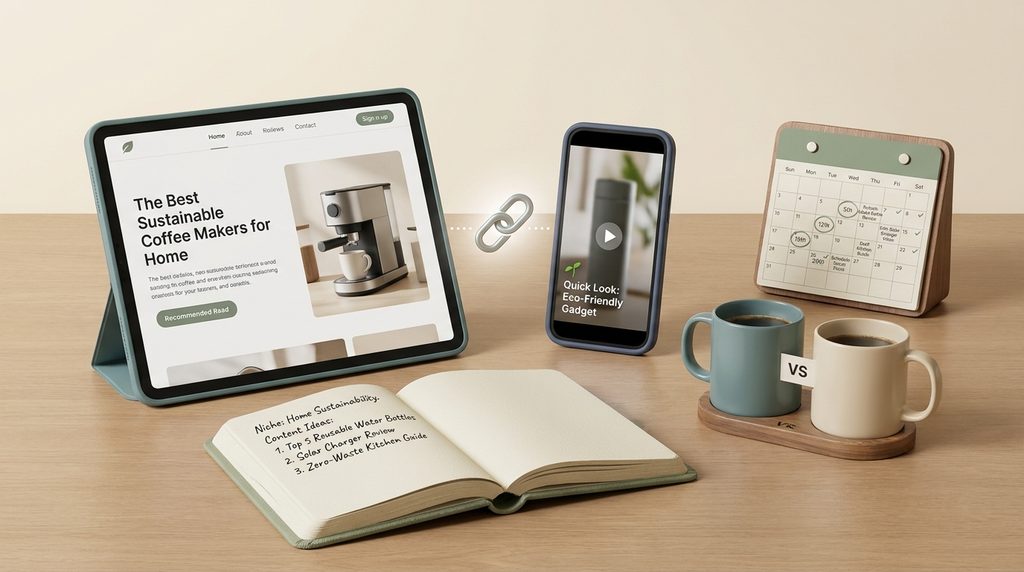
Affiliate marketing for beginners can start close to zero, but a basic setup runs $5, $15 per month for domain and hosting, plus an email tool (many platforms have free tiers for small lists). Paid ads can add hundreds per month and are not recommended when you’re starting out. Start with organic traffic through content, SEO basics, or social distribution, and only layer in paid promotion once you know what’s converting. Amazon Associates is the easiest entry point; ShareASale and CJ become logical next steps once your traffic and niche are established and you want access to higher-commission affiliate programs for new marketers.
Platform Comparison: Where to Start on Each Path
For freelancing, start with Fiverr for speed of entry, then add Upwork once you have a few reviews and want access to higher-value clients. For affiliate marketing, start with Amazon Associates, expand to ShareASale once you understand your audience, and move to CJ when you’re ready to evaluate more complex offer structures. Neither path requires a large upfront investment. The real cost on both sides is time, not money.
How to Choose the Right Path for Your Situation
Choose Freelancing If These Things Are True for You
Freelancing is the right call if you need income within 60 days and you already have a marketable skill, writing, design, video editing, social media management, or virtual assistance. It’s also the better fit if you’re comfortable managing client expectations and deadlines and you want direct feedback on your work as you build your reputation. It’s an active-income model with a fast ramp and a clear connection between hours worked and money earned.
Choose Affiliate Marketing If These Things Are True for You
Affiliate marketing makes more sense if you can wait 3, 6 months for your first meaningful income. It fits people who enjoy creating content and want to build something that earns without requiring daily attention once it’s running. If you don’t want to manage client relationships or customer service, and you’re willing to consistently learn SEO, email marketing, or social content strategy over time, this path rewards that commitment. The ramp is longer, but the ceiling is higher and the income doesn’t stop when you take a week off.
Where to Get Step-by-Step Guidance for Whichever Path You Pick
Working With Walter has beginner-friendly guides covering both paths from scratch, built specifically for people who don’t have a technical background or prior marketing experience. Whether you’re writing your first Fiverr gig description or setting up your first Amazon Associates account, the guides walk you through each step without assuming you already know the terminology.
If you want expert support alongside the self-guided resources, the team at AgencyServicesGrp (agencyservicesgrp.com) works with freelancers building their personal brand online and affiliate marketers growing their audience. It’s a done-with-you option for people who want professional guidance while they’re learning.
Common Questions Beginners Ask
Can You Do Both Freelancing and Affiliate Marketing at the Same Time?
Yes, but not from day one. Splitting your focus as a complete beginner slows progress on both paths. Pick one for the first 90 days and get it generating consistent income or workflow before adding the second. The strongest hybrid approach uses your freelance niche as your affiliate content niche, so the work overlaps and supports itself rather than pulling you in two directions.
Which One Pays More in the Long Run?
Freelancing has a ceiling tied to your available hours. Experienced freelancers after 2, 3 years often earn $5,000, $12,000 per month depending on specialization, but they’re trading time for every dollar. Affiliate marketers in strong niches can scale past that without a proportional increase in working hours, since existing content keeps earning. The honest answer: affiliate marketing has a higher ceiling over a 2, 3 year horizon, but freelancing delivers more reliable and predictable income in the short term. For most beginners, passive vs active online income is less about which is bigger and more about which timeline you can actually commit to.
Do I Need a Website to Get Started with Either Path?
For freelancing, no. Fiverr and Upwork handle your profile and client discovery entirely. For affiliate marketing, a website isn’t strictly required, but Amazon Associates’ approval process asks for an active content channel with original content. Their guidelines suggest at least 10 posts as a starting benchmark for a site, or a social account with at least 500 followers. A basic site or email list dramatically improves your long-term results on the affiliate side, even if it’s not mandatory on day one.
Freelancing vs Affiliate Marketing for Beginners: The Bottom Line
So, affiliate marketing vs freelancing, which is better for beginners? The answer depends on your timeline, existing skills, and preferred working style. One path gets you paid faster with more structure; the other builds compounding income over time with more flexibility. Choose one, commit to it for 90 days, and follow a clear plan rather than switching directions every time you read a new article. Working With Walter has the step-by-step resources to get you started on either path. The next move is yours.