Key takeaways
- Local service marketing is about being visible to high-intent buyers in your geographic area, not just being “online.”
- Google Business Profile and Local Services Ads are the fastest paths to qualified local leads.
- Local SEO for service providers compounds over time and keeps producing leads after the initial work is done.
- Referrals and reviews deliver the highest ROI, yet many service businesses underinvest in both.
- If you can’t tie a booked job back to the channel that generated it, you can’t improve your results.
- Working With Walter publishes detailed channel guides so you can go deeper on every tactic covered here.
Most local service businesses don’t lose clients because of bad work. Visibility is often the real culprit, another provider showed up at the top of search results at the exact moment a nearby buyer was ready to hire. That’s not a skills problem. Effective local service marketing closes that visibility gap before a competitor does.
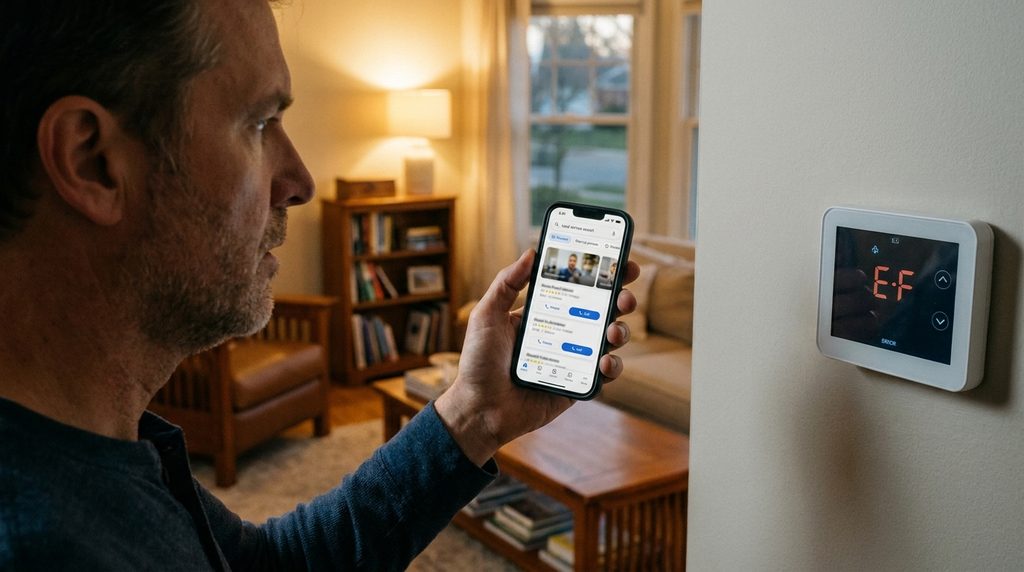
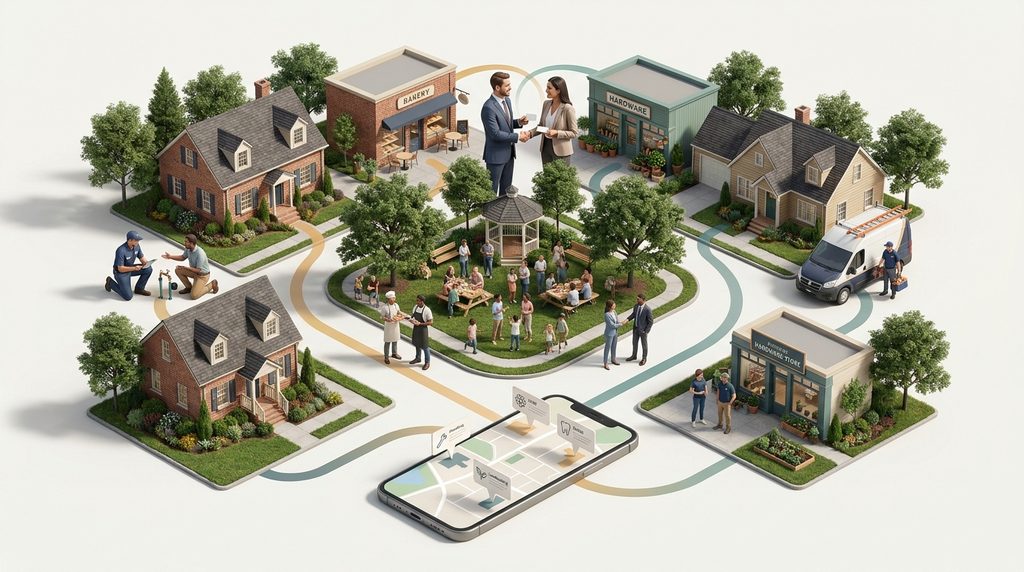
Local service marketing is the deliberate, channel-specific practice of getting your business in front of high-intent buyers within your geographic area and converting that attention into booked jobs. It differs from generic digital marketing because geography and timing are everything. A homeowner searching “emergency plumber near me” at 9 PM isn’t browsing. They’re buying.
This article covers the channels, tactics, and mindset shifts that matter most in 2026. By the end, you’ll know which channels to prioritize, how they work together, and where to go next for hands-on implementation. Working With Walter publishes detailed, channel-specific guides for every tactic covered here, so treat this as your starting point, not your finish line.
The mindset shift that local service marketing actually requires
Most small service businesses approach marketing by copying what they see larger brands do: broad social media posts, a generic website, maybe some Google ads. That’s not local service marketing. Local marketing for service businesses means narrowing your focus deliberately to the geography, platforms, and search behaviors of buyers within a specific radius.
The buyer searching “HVAC repair near me” at 8 PM is ready to book. The buyer scrolling Instagram is not. Local channels are built around capturing that first type of intent, the urgent, geographically specific, high-intent search that signals someone is ready to spend money right now. Your job is to be the answer when that search happens.
A smaller geographic market is an advantage, not a limitation. Ad competition is often lower, cost-per-lead can be reduced, and brand recognition builds faster inside a defined area. You don’t need to out-market a national brand. You need to out-market the three other local providers who show up in the same search results. That’s a much more winnable game.
The local marketing channels that produce the best ROI in 2026
Not all channels deliver equal results for service businesses. Ranked by typical ROI for local service providers, the order looks like this: referrals and review generation first, followed by Google Business Profile optimization, local SEO, Google Local Services Ads, and then social media platforms. Understanding why this order exists helps you allocate budget and time correctly.
Referrals win on pure cost efficiency because they arrive with built-in trust and close at higher rates. Google Business Profile is free and drives high-intent calls directly from search. Local SEO compounds over time, producing leads long after the initial investment. LSAs charge per qualified lead rather than per click, which makes the ROI math straightforward. Social media is useful for retargeting and neighborhood-level awareness but rarely the strongest acquisition channel for urgent-service demand.
The best-performing local service businesses don’t pick one channel and ignore the rest. They layer them: organic visibility through GBP and local SEO captures searchers already looking for your service, LSAs capture high-intent paid demand, and a review and referral system builds the trust that lifts conversion across every other channel. Working With Walter covers each of these channels in dedicated guides built specifically for service-based businesses.
Setting up Google Local Services Ads the right way
LSAs work differently from standard Google Ads. You pay per qualified lead with contact information attached, not per click. For most home-service verticals, that makes the ROI calculation more predictable than traditional PPC, because you know exactly what you’re paying per contact rather than per anonymous click. Before you run a single ad, though, the setup has to be done correctly.
Start by confirming LSA eligibility for your service category and location, then connect or create a verified Google Business Profile. Complete the Local Services signup flow, define your service area and the specific services you offer, and submit for verification. One step many businesses overlook: your GBP must be verified and match your LSA profile exactly on name, address, phone number, and hours. Mismatches between the two will limit your ad performance.
Verification requirements vary by category. Most home-service verticals require business registration documentation, proof of insurance, and a background check. Approval typically takes two to six weeks depending on how complete your documents are when you submit.
Budget expectations should also be realistic from the start. In 2026, house cleaning runs roughly $14 to $18 per qualified lead. HVAC runs $35 to $55. Roofing lands in the $40 to $75 range. Water damage restoration can exceed $110 per lead. These aren’t cheap clicks to a landing page. They’re actual leads with names and phone numbers attached.
Local SEO and review strategies that build lasting trust
Local SEO for service providers starts with one foundational fix that many businesses overlook: NAP consistency. If your business name, address, and phone number appear in different formats across Google, Yelp, Angi, Facebook, and local directories, that inconsistency damages both trust and local search rankings. Standardize your NAP across every platform before you do anything else.
From there, the highest-impact local SEO work comes down to two priorities. First, fully complete your Google Business Profile with the right categories, service descriptions, photos, and hours. Second, build service-area pages that address real local intent rather than just swapping city names on a template, and earn local links from community organizations, chambers of commerce, and industry directories. These tactics compound, the work you do in month one keeps producing leads in month twelve.
Reviews deserve their own attention because they function on three levels simultaneously: as a ranking signal in local search, as a conversion tool on your GBP listing, and as a trust asset that lifts your close rate across every channel. Research consistently shows that businesses with more reviews and higher average ratings convert more traffic, even when competing at the same price point.
The fix is simple but requires consistency: ask for a review immediately after every completed job via text or email, make the process two taps for the customer, and respond publicly to every review, positive and negative. Working With Walter has a full local SEO guide covering service-area pages, citation building, and GBP optimization in detail.
Hyper-local tactics that bigger competitors overlook
Hyper-local marketing targets specific neighborhoods, ZIP codes, or communities rather than a broad metro area. This is where small local service businesses hold a genuine structural advantage over regional or national competitors who can’t customize messaging at the neighborhood level.
Neighborhood-targeted Facebook and Instagram ads using tight geographic radius settings let you reach homeowners in a specific ZIP code. Cost-effectiveness varies by market, but the targeting precision alone gives local operators an edge that broad-reach campaigns can’t replicate. Joining local Facebook groups and Nextdoor with genuine helpfulness rather than hard-sell posts builds name recognition in the communities you serve. Sponsoring a local event or setting up referral arrangements with complementary local businesses, a plumber partnering with an HVAC contractor, for instance, costs almost nothing and produces high-trust leads.
Referrals deserve a system, not just goodwill. Many service businesses treat referrals as a happy accident when they’re actually a predictable output of a simple process: a post-job follow-up message, a direct referral ask, and a small thank-you when a referral books. In tight geographic markets where word of mouth travels fast, this compounds significantly over time. It’s the highest-ROI tactic on this list and the one most businesses spend the least time on.
Measuring your local service marketing results and fixing what’s not working
The most common local marketing mistake isn’t picking the wrong channel. It’s running campaigns with no way to connect a booked job back to the channel that generated it. Without tracking, you’re spending money and guessing at results. With tracking, you’re running a business.
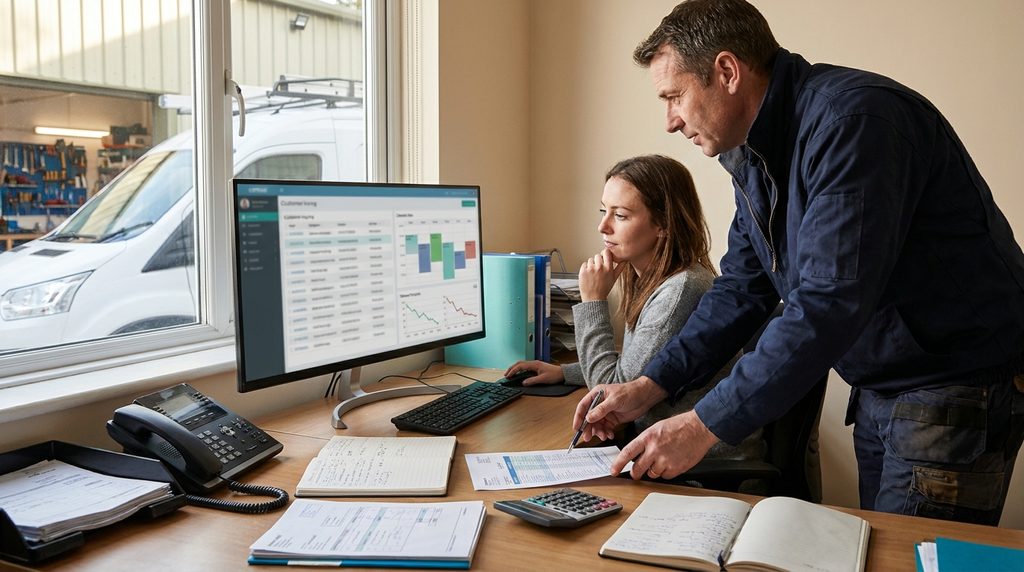
The minimum viable measurement stack for a single-location service business includes a call tracking number for each active channel, UTM parameters on any landing page you’re driving traffic to, and a simple CRM or even a spreadsheet that records where each lead originated. The metrics that matter: calls per channel, cost per lead by channel, lead-to-booked-job conversion rate, and revenue per channel. These four numbers tell you exactly where to put more money and where to pull back.
For businesses with more than one service area or location, category-level tools simplify the work. BrightLocal handles local SEO rank tracking and citation audits well. Birdeye and Chatmeter both handle reputation management and review aggregation across multiple locations. SE Ranking covers local visibility including GBP and AI-answer tracking in one place. You don’t need the enterprise tier to get started, a basic call tracking tool and Google Analytics cover most of what a single-location service business needs in year one.
Prefer to hand this off to a team that handles it for you?
You now understand the channels and the tactics. But understanding local service marketing and executing it consistently while running a business are two different challenges. If you’d rather focus on the jobs and let someone else handle the visibility work, Walter’s agency partner can help.
AgencyServicesGrp handles the done-for-you execution: GBP optimization, local SEO, listing management, and ongoing online visibility work. They take care of the fundamentals so you can stay focused on your customers. If consistent local visibility is a gap in your business right now, reach out to AgencyServicesGrp directly to learn what they can do for you.
Start executing on the basics before chasing advanced tactics
Local service marketing is not one tactic. It’s a coordinated set of channels, Google Business Profile, Local Services Ads, local SEO, reviews, and hyper-local outreach, all working together to keep your business visible when nearby buyers are ready to hire. No single channel does the job alone, but each one reinforces the others.
Working With Walter publishes detailed, channel-specific guides for every tactic covered in this article. Each section here is a starting point. The deeper implementation guides are where the real work happens, and they’re built specifically for small service businesses without big marketing budgets or agency support.
The businesses winning local clients in 2026 aren’t outspending the competition. They’re out-executing them on the basics: a complete GBP, steady review acquisition, consistent NAP data, and a referral system that runs on its own. Those basics are learnable, and they’re worth more than any advanced tactic you could layer on top of a shaky foundation.
Frequently asked questions
What is local service marketing and how is it different from regular digital marketing?
Local service marketing focuses specifically on high-intent buyers within a defined geographic area. Regular digital marketing often targets broad audiences based on interests or demographics. Local service marketing targets people who are actively searching for a specific service in a specific location right now. The intent level is fundamentally different: someone searching “roof repair near me” is far closer to a purchase decision than someone who sees a general roofing ad while scrolling through a feed. Local channels, including GBP, LSAs, and local SEO for service providers, are designed around that geography-plus-intent combination.
Are Google Local Services Ads worth it for a small service business?
For most home-service verticals, yes. LSAs charge per qualified lead rather than per click, which means you only pay when someone contacts you directly through the ad. The 2026 benchmark average for home services sits around $53 per lead. Whether the math works for your business depends on your close rate and average job value, but house cleaning, HVAC, plumbing, electrical, and roofing all have established LSA ecosystems with enough volume to generate consistent results. The key is getting the verification and GBP setup right before you go live.
How do I get more reviews for my local service business?
Ask immediately after a completed job, while the experience is fresh. Text or email works better than a verbal ask because it gives the customer a direct link and reduces friction. Keep the process simple, ideally just a couple of taps to reach the review form. Respond publicly to every review you receive, including the negative ones, because your response signals to future customers how you handle problems. A steady flow of new reviews matters more than a one-time burst, so build the ask into your standard post-job follow-up routine.
How much should a local service business spend on marketing?
A commonly cited rule of thumb is five to ten percent of gross revenue, though the right number depends on your growth stage and goals. Before you put money into paid channels, make sure your Google Business Profile is fully optimized and your review count is growing consistently. Both are low-cost activities that improve the performance of every paid channel you layer on top. Once your organic foundation is solid, LSAs and targeted local ads become easier to justify because the trust signals are already in place to convert the traffic they generate.