- Internet marketing is learnable without a tech background or a big budget.
- Content, SEO, social media, and email are the four channels beginners should prioritize first.
- Free tools like Google Analytics 4, Google Search Console, and Canva are enough to start building real skills.
- A consistent 30-day routine produces measurable results, even for someone starting today.
- Working With Walter offers beginner-focused guides that skip the jargon and cut straight to what works.
If you want to know how to get started with internet marketing with zero experience, this guide walks you through the first 30 days step by step. Most beginner guides assume you already know what a funnel is, have a website ready to go, and understand the difference between organic and paid traffic. This one doesn’t assume any of that.
By the time you finish reading, you’ll know exactly what internet marketing is, which channels to focus on first, and what to do every week for your first 30 days. No six-figure promises, no jargon walls, no fluff, just a practical starting point that respects your time.
Working With Walter is built specifically for people in this position: small business owners, career changers, and total beginners who want real, jargon-free digital marketing guidance without wading through content written for seasoned agency pros. That’s the spirit behind everything here.
What Internet Marketing Actually Is (And Why Beginners Overthink It)
Strip away the buzzwords and the definition is simple: internet marketing is promoting a product, service, or idea through online channels to attract attention and drive action. That’s it. Everything else, funnels, conversion rates, attribution models, is just detail layered on top of that core idea.
The biggest misconception beginners carry is that this field requires coding skills, expensive software, or a marketing degree. It doesn’t. The tools are learnable, and the strategy is mostly common sense applied online. Content writing, basic SEO, and social media management are the easiest entry points, and none of them require a technical background to start. This is exactly why learning digital marketing free of charge is more realistic today than it’s ever been.
What It Looks Like in Practice for a Beginner in 2026
Picture a local plumber who shows up in Google search results because he set up and optimized his Google Business Profile. Or a career changer who lands her first freelance client by writing three LinkedIn posts a week about her area of expertise. These aren’t complicated campaigns, they’re basic applications of internet marketing that work because they’re consistent and specific.
AI tools in 2026 have lowered the barrier even further for beginners. Writing, research, and content formatting are all faster now. But human judgment still drives results. Tools help you move faster; your thinking determines whether you move in the right direction.

How to Get Started With Internet Marketing With Zero Experience: Choosing Your First Channels
Trying to learn every channel at once is the fastest route to burnout and zero results. In practice, content combined with SEO, social media, and email marketing are the three lowest-barrier entry points for someone with no experience. Start with one, get comfortable, then add a second.
Content and SEO: The Slow Burn That Pays Off
Content and basic SEO form the foundation of internet marketing because they compound over time and cost nothing but effort. For a beginner, “basic SEO” means writing helpful content around questions people search for, using Google Search Console to see what’s working, and making sure each page has a clear title and description. HubSpot Academy and Semrush Academy both offer free certifications that teach these fundamentals in a structured way, and hiring managers actually recognize those credentials.
Social Media and Email: The Fastest Channels to Get a Response
Social media and email produce faster feedback loops than SEO. A beginner who posts consistently on one platform can start real conversations within days. Pick one platform where your target audience already spends time, and focus there entirely before expanding. Email marketing requires building a list first, but even 50 engaged subscribers will teach you more about audience behavior than reading any textbook. Mailchimp’s free plan handles up to 500 contacts and includes basic automation, more than enough to learn on.
What to Skip for Now
Paid advertising through Google Ads or Meta Ads requires both budget and existing data to work effectively. It’s not the right starting point when you’re figuring out how to start digital marketing with no experience. Advanced automation and conversion rate optimization come after you understand the basics. Beginners who jump to paid ads before mastering the fundamentals typically waste money and lose confidence, which stops their learning cold.
Free Tools to Set Up Before You Do Anything Else
Think of this as your starter stack: the minimum setup you need before you start practicing. Nothing paid, nothing complex. Get these in place first and you’ll have a real feedback loop from day one.
Analytics and Search Visibility: The Two You Can’t Skip
Google Analytics 4 shows you who visits your site and what they do while they’re there. Google Search Console shows what search queries bring people to you and whether Google can find your pages at all. Together, they give you a complete picture of your online presence without spending a cent. Microsoft Clarity is worth adding too, it records heatmaps and session replays so you can see exactly how visitors interact with your pages.
Creative and Content Tools: Where Beginners Underestimate Canva
Canva handles social graphics, simple ad creatives, and presentation decks through a free account. Set up a basic brand kit with two colors and two fonts, then build one reusable template for social posts. That single setup saves hours every week and keeps your visuals consistent. For email, Mailchimp’s free plan covers list building and basic automation at no cost, giving you a real environment to practice in before you ever spend a dollar.
How to Get Started With Internet Marketing With Zero Experience: Your 30-Day Plan
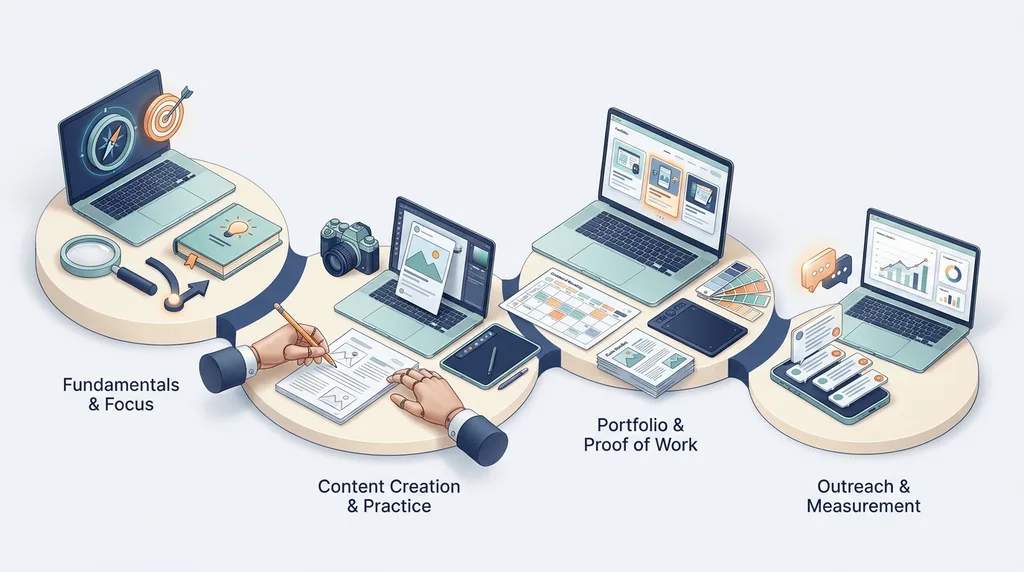
This is the section that matters most. Each week has a specific focus so you’re always moving forward, not just consuming more information.
Week 1: Define Your Focus and Set Up Your Foundation
Start by choosing one channel, just one. Then set up your analytics tools so you have somewhere to send traffic and data to review. Complete one free certification this week: Google’s Fundamentals of Digital Marketing takes about 40 hours total but breaks into short daily sessions easily. Finally, create one practice page or social profile to use as your learning environment. Don’t worry about publishing anything publicly yet. Get the infrastructure in place first so your efforts have somewhere to land.
Week 2: Learn by Doing, Not Just Watching Videos
Write and publish your first three pieces of content this week. That could be three blog posts, three LinkedIn articles, or three email drafts sent to a small test list. Set up Google Search Console if you have a site. At the end of the week, review your first analytics data even if the numbers are tiny. The habit of checking data matters more at this stage than what the numbers actually say.
Week 3: Build Something Portfolio-Worthy
Start a small project that produces real output. Good options include a simple portfolio page showing your work, a basic audit of a local business’s online presence (done with their permission), or a sample social media content calendar for a fictional brand. Beginners who send 8 to 10 personalized outreach messages per day during this phase often land their first real conversation within two weeks. The point isn’t perfection, it’s proof that you can do the work.
Week 4: Reach Out and Measure What You’ve Built
Send your first 50 outreach messages to potential clients or employers using a short, specific pitch. Focus on one clear offer and one clear result you can help them achieve. Review what worked in weeks one through three, adjust one thing based on your data, and document your results. A beginner following this plan consistently ends day 30 with one certification, three portfolio pieces, and one to three active conversations in progress.
Where to Keep Learning Without Getting Overwhelmed
The problem isn’t lack of resources. There are thousands of courses, YouTube channels, and Reddit threads on digital marketing, and most of them assume significant prior context. The real challenge is finding one structured starting point built for a complete beginner who wants to learn digital marketing free of heavy upfront costs.
Working With Walter fills exactly that gap. The guides there cover email marketing, affiliate marketing, lead generation, and online visibility in plain language that someone with zero background can follow and actually apply. Start with one topic, finish it, then move to the next. That linear approach beats sampling a dozen courses and finishing none of them.
Get Professional Support for Your Online Visibility
If you’re a small business owner who wants expert help getting found online while you’re still learning the ropes, Walter’s Agency Services Group offers online visibility services built specifically for small businesses. The DIY path is valuable, but having professional eyes on your strategy can accelerate results. If the learning curve feels too slow for your business timeline, that’s a logical next step worth exploring.
Frequently Asked Questions
How long does it take to get your first internet marketing client with no experience?
Most beginners who follow a consistent outreach routine of 8 to 10 personalized messages per day land their first paid conversation within two to four weeks. The first paying client typically arrives within 30 to 45 days when the outreach is targeted and the offer is specific. Less focused approaches take longer, often four to seven months, but the timeline is mostly within your control.
Do I need a website to start internet marketing?
No. Many beginners land their first clients through LinkedIn, email, or freelance platforms before ever building a website. A simple portfolio page helps demonstrate your work, but it’s not a requirement on day one. Start with outreach and build the website once you have something worth showing.
Which free certification should I get first?
Google’s Fundamentals of Digital Marketing is the strongest first credential for a complete beginner. It’s free, structured, and recognized by hiring managers and clients across industries. After that, HubSpot’s SEO certification and Semrush Academy are solid next steps for building credibility in search and content marketing.
Is internet marketing realistic to learn part-time?
Yes. Ten to fifteen focused hours per week is enough to complete certifications, build starter projects, and run your first outreach campaigns at the same time. Most practitioners and coaches put the floor at around 8 to 10 hours per week for meaningful progress. Consistency matters more than volume, so a steady part-time schedule beats irregular all-day sessions.
What’s the biggest mistake beginners make when starting out?
Trying to be everywhere at once. Spreading effort across five channels before mastering one produces weak results across the board and burns out most beginners within weeks. Pick one channel, commit to it for 30 days, and learn what works before expanding. That focused approach produces better results faster than any multi-channel strategy a beginner can realistically execute.
Start With One Channel, Start Today
Internet marketing is not a skill locked behind degrees or expensive training. It’s learnable, practical, and 2026 is one of the best times in history to start, free tools and free education are genuinely everywhere. The 30-day plan above is a starting line, not a finish line.
Now that you know how to get started with internet marketing with zero experience, the next move is straightforward: pick one channel, follow the weekly plan, and stay consistent. When you’re ready to go deeper without getting lost in generic advice, Working With Walter is the place to go. The guides there are built for exactly where you are right now, starting from zero, without the jargon, without the hype.
Bookmark this page, pick one channel from section two, and start week one today. That single decision puts you ahead of most people who read guides like this and never take the first step.